
How to Find Commercial Cleaning Clients: Where to Start
If you want to know how to find commercial cleaning clients when you have 0 to 10 accounts, the short answer is that you go to them. Office managers and practice owners rarely search for a new cleaner, so you pick one business type and one area, build a list of those businesses, and contact
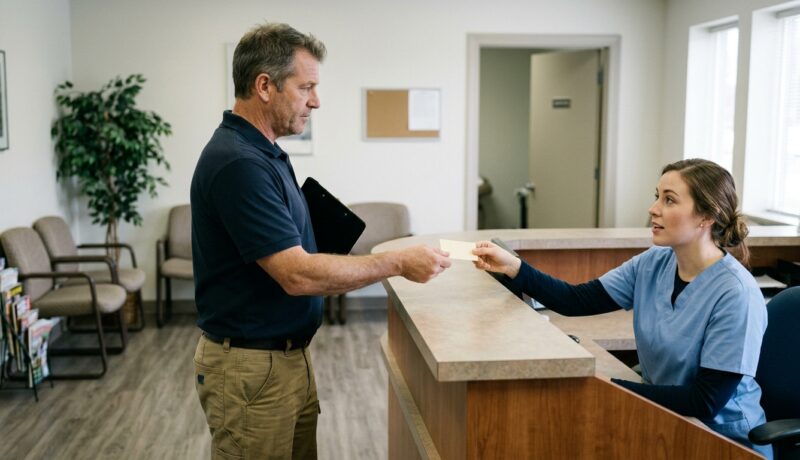
If you want to know how to find commercial cleaning clients when you have 0 to 10 accounts, the short answer is that you go to them. Office managers and practice owners rarely search for a new cleaner, so you pick one business type and one area, build a list of those businesses, and contact them directly. Referrals, partners and online visibility add clients too, but they take months to build up. This post covers who to target, where commercial clients come from, how to build and clean a prospect list, and which channel to use first. What to say once someone picks up the phone is covered in our cold calling guide.
Why waiting to be found doesn’t work for commercial clients
Most businesses that could use a commercial cleaner already have one, or someone on staff does the job after hours. They start looking when something goes wrong: a missed night, a complaint from a customer, a lease change, or a contract that comes up for renewal. Until then, the demand is there but you can’t see it. That’s why learning how to get commercial cleaning clients is mostly about reaching the buyer before they start shopping.
Residential cleaning works the other way round. A homeowner who wants a cleaner searches online, asks neighbors and compares quotes. An office manager whose current cleaner shows up most nights does none of that, so a website and a review profile will rarely reach them. With janitorial clients, the first move is yours: a call, an email or a visit that happens to land when they’re open to a change.
Decide who you’re looking for
Pick a business type you can serve now
Start from your own operation, not from which industry sounds most profitable. Ask yourself which hours you can staff: evenings after closing, early mornings before opening, or weekends. Then ask how much space one crew can finish in a shift, what you already clean well (hard floors, restrooms, break rooms, carpet), and which requests you can meet today, such as a certificate of insurance or background-checked staff. A business type that matches all four is a better first target than a bigger one you’d have to hire for.
| Business type | Fits you if… | Check before you target them |
|---|---|---|
| Dental and medical offices | You can work evenings after the last patient and follow a written checklist room by room | Which surfaces their own staff clean and which they want you to clean; whether one owner signs or a practice group does |
| Small offices | One crew can handle a few short evening visits a week | Whether the landlord already provides cleaning as part of the lease |
| Daycares | You can clean early morning or after close, around play areas and restrooms | The center’s own cleaning and sanitizing standards and any state licensing rules. |
| Gyms | You can staff late nights or early mornings, often 6 or 7 days a week | Whether they’re open 24 hours (so you clean with members on the floor) and whether a franchise office picks vendors |
| Churches | Daytime or midweek slots suit your schedule, and you can handle large rooms | Who signs (pastor, administrator or a board) and whether the decision waits for a meeting |
| Property managers | You can take on common areas, unit turnovers or several small buildings | Whether they manage commercial or residential property, and whether you must join an approved vendor list first |
See what potential customers look like
Before choosing a niche, look at actual prospects in your target area. These sample lists cover several business types:
- Dental offices in Oklahoma City
- Dental offices in Tulsa
- Medical offices in St. Louis
- Daycares in Indianapolis
- Insurance agencies in Madison (an example of a small-office prospect).
Each list focuses on one business type in one city. Review the names and websites to get a feel for the prospects you could contact, and look for clues about whether a business operates independently or belongs to a larger group. That distinction can help you decide which prospects are more likely to fit your services and sales approach.
One caveat: Property managers and churches may require extra research. Google Maps coverage and relevance for these categories have not been verified, so search results may include businesses that don’t match your intended audience. Before committing to either niche, run a search in your own area and inspect the results. Make sure there are enough relevant prospects to justify your outreach effort.
Draw a service area you can actually cover
Commercial cleaning happens mostly at night, so every minute between sites comes out of your crew’s shift. Say two of your buildings sit 40 minutes apart: that drive happens on every visit, and nobody pays you for it. Start with one city, or a cluster of neighborhoods inside one city, and grow outward once you have accounts to route around.
The common mistake is building a list that spreads across a whole metro area. It looks bigger, but you can’t do walk-ins efficiently across 30 miles, and two small sites won’t fit on one night’s route if they’re on opposite sides of town. A tight area also makes your pitch more concrete, because you can tell a prospect you already clean a building down the street once you do.
What a good first client looks like
A good first client has one location, makes its own decisions and has a space one crew can finish in a shift. Think of a single-location dental practice, a small insurance agency or a 3-room office suite. Multi-location groups often send cleaning decisions to a regional or operations manager, so the person you meet on site may not be able to sign. You don’t need a perfect profile; you need someone who can say yes and a job you can deliver without hiring first.
Where commercial cleaning clients come from
Commercial clients come through several channels, and most established cleaning companies use more than one. When you have 0 to 10 clients, though, most of those channels depend on history you don’t have yet: past clients to ask, partners who know your work, a reputation that shows up online. Direct outreach from a list is the one channel where you decide how many businesses you contact this week. The table below compares them; it’s general judgment, not measured data.
| Channel | What it costs you (time / money) | How fast it can produce a walkthrough | Fits 0 to 10 clients? |
|---|---|---|---|
| Direct outreach from a prospect list | Mostly your time; a list can cost money | Weeks, depending on how many businesses you contact | Yes, the main channel |
| Referrals from current clients | Little time or money | Depends on your history; none at 0 clients | Later, once you have clients |
| Partners who serve the same businesses | Time spent building relationships | Months | As a side channel |
| Bids and RFPs | A lot of paperwork time; possible bonding and insurance costs | Weeks to months, on the buyer’s schedule | Usually not at first |
| Subcontracting for larger companies | Time to find and qualify a firm | Depends on the firm’s needs | Yes, for references |
| Getting found online | Some setup time; ad spend if you run ads | Months | Not on its own |
Direct outreach from a prospect list
You pick the business type and area, build the list, and contact each business by phone, email, walk-in or a mix. It’s slower per contact than a referral, but you control the volume and the timing. The next two sections cover building that list and cleaning it before you start.
Referrals from current clients
At 0 clients this channel doesn’t exist yet, so don’t count on it in your first month. Once you’ve done a stretch of good work for a client (a few months of visits without complaints is a reasonable point), ask them. Ask for a specific type of business, not “anyone”: “Do you know another practice owner, or someone in this building, who’s unhappy with their cleaner?” gives the person a face to think of, while “anyone you know” usually gets a polite “I’ll keep you in mind.”
Partners who serve the same businesses
Some people already visit the businesses you want. Property managers are both a possible client and a source of introductions to tenants. Commercial real estate agents see move-ins and move-outs that need a clean, and trades such as carpet cleaners, window cleaners and pest control companies are in the same buildings every month. Offer to send them referrals in return, and mean it.
The trade-off is time and control. Partnerships take months of coffee, calls and favors before anything comes back, and they depend on relationships you can’t rush. A partner sends you work when they happen to hear of it, not when you need it.
Bids and RFPs
If you’re asking where to find commercial cleaning contracts that are advertised publicly, bid portals are the answer. In the US, federal agencies, states, cities and school districts post cleaning work on their purchasing portals, and some property management companies send out their own bid requests. Federal work requires an online registration step before you can bid: contractors must be actively registered in SAM.gov to bid on and receive federal cleaning and janitorial contracts, subject to specific regulatory exceptions.
The hurdles are steep for a new company. Bid documents often ask for proof of insurance, sometimes a bond, references for similar past work, and a detailed price, and many public buyers weigh price heavily. With no commercial history, you’ll often fail on past performance before price even comes into it. Read a few bids now to learn what buyers ask for, and come back to them once you have references.
Subcontracting for larger cleaning companies
Larger janitorial firms and facility management companies sometimes hand individual sites to smaller subcontractors. You get commercial work without selling to the end client, and you build references you can use later. The trade-off: your margin is lower, the larger firm sets the scope and the rules, and the client relationship belongs to them, so you can’t count that client as your own.
Getting found online
A Google Business Profile and a basic website that lists your commercial services are worth setting up early. Their main job at your stage is to back up your outreach: after a call or a walk-in, many buyers will look you up, and an empty search result makes you look less established. As a primary source of commercial clients for a new company, though, they’re slow, because most commercial buyers aren’t searching in the first place.
Paid search ads can put you in front of the few who are searching, but costs may vary by city and keyword. Don’t rely on online visibility alone while you have 0 clients. Treat it as the thing a prospect checks after you’ve already contacted them.
Build your prospect list
A prospect list is a spreadsheet of businesses that match your type and area, with a phone number, an address and room for notes. The cold calling guide already covers which columns to keep and the manual versus tool choice, so this section only adds what it doesn’t: how to search wider, where to fill gaps, and how big to go. Most commercial cleaning leads for a small company start with one map search, so that’s where to begin.
Start with Google Maps
Don’t stop at one search phrase. “Dentist”, “dental clinic” and “orthodontist” each return a different set of businesses, and so do “medical office”, “family doctor” and “urgent care”. Run 2 or 3 phrases for your business type in the same area, merge the results and remove duplicates by phone number or address.
Leads for Cleaners does this from the same source: it pulls live Google Maps results for a business type and city when you search, removes permanently closed places and places with neither a phone number nor a website, adds one business email on US searches when the business lists one on its website, and exports to CSV. It doesn’t give you decision-maker names, so you’ll still find out who decides on the first call or visit.
Google Maps has a blind spot. A business that never set up a listing doesn’t appear, and that’s common for small offices inside larger buildings, such as a 4-person accounting firm on the third floor. If your target type includes a lot of those, plan on the local sources below.
Fill the gaps with local sources
Each of these adds businesses Google Maps misses, and each has a drawback:
- Chamber of commerce member directories. They add established local businesses, often with a named contact. They only list members, and many entries have a website but no phone number.
- Building lobby directories. They show every tenant in an office building, including those with no map listing. You have to visit to read them, and you get names only, so you’ll look up contact details yourself.
- Local business associations. Downtown associations and industry groups list members by area. Directories are often out of date, and some are only visible to members.
- State licensing lookups. For regulated types such as daycares, some states publish a searchable list of licensed providers. These can be more complete than map data, but the listed contact is often the licensee, not whoever handles cleaning.
How big your first list should be
Size the list to how many contacts you can actually make, not the other way round. Say you can do 30 dials in one calling block. A 50-business list is then 2 blocks of first dials, and a few more once you add second attempts and callbacks. This is a hypothetical, not a typical figure: work out your own pace in the first week and size the next list to match it.
Remove the wrong prospects before you start
Before each call you’ll do a quick check of the business you’re about to dial. This step is different. It removes businesses that should never be on the list at all, so you don’t waste a calling block on them. Go through the list once and delete:
- Businesses outside your service area. Map results often include the next town or a suburb you didn’t plan to cover.
- Sites too large for your crew. A hospital or a 10-floor office tower isn’t a first account.
- Residential addresses. Home-based businesses don’t need a commercial cleaner, and showing up at someone’s house for a walk-in is awkward for both of you.
- Businesses that are already your client, or that you’ve already contacted from an earlier list.
- Anyone who asked not to be contacted. Keep a separate do-not-contact list and check every new list against it.
Choose how to reach out first
| Channel | Works best when | Limitation |
|---|---|---|
| Phone call | You have a business number and want an answer the same day. It’s the default for most verticals; see how to cold call for commercial cleaning contracts | Most calls end at the front desk, and you rarely reach the decision-maker on the first try |
| Cold email | The business lists an email address and you can keep the message short and in plain text | Many small businesses don’t publish an email, so many leads won’t have one; the address you find is often a general inbox |
| Walk-in | The business has a front desk, you go at a quiet time (mid-morning, mid-afternoon), and you group visits by neighborhood | You’ll usually talk to the front desk, not the owner, and a walk-in during a rush gets you a business card and a “we’ll call you” |
| Website contact form | There’s no phone number or email | Forms are slow and often go to a general inbox, so expect replies days later or not at all |
| You need a person’s name at a property manager or larger office | Most prospect lists, including Google Maps data, give you a business phone, not a person; small offices often have no one on LinkedIn |
Your first month, step by step
This is a hypothetical plan to adjust to your schedule, not a measured result:
- Week 1. Pick one business type and one area. Build the list from 2 or 3 map searches, fill gaps from one local source, and remove the wrong prospects.
- Weeks 2 to 3. Run your calling blocks on the days you set aside for them. On other days, do walk-ins grouped by neighborhood, so 4 or 5 visits fit into one trip.
- Week 4. Make the follow-ups you promised during weeks 2 and 3. Then review: how many businesses you contacted, how many conversations you had, and how many walkthroughs you booked.
For every lead, write its source in your notes: the list it came from, a referral, a partner or a walk-in. After a month you’ll see which channel produced walkthroughs, and you can put more time into that one. Put each next-step date in your own calendar on the day you agree it, since a note in a column won’t remind you when the date comes.
Frequently asked questions
How long does it take to get your first commercial cleaning client?
There’s no reliable typical timeline, because it depends on how many businesses you contact and on your own conversion rates. Anyone who quotes you a fixed number of weeks is guessing. After your first batch of contacts, count your dials, conversations and walkthroughs, and use the funnel math in the cold calling guide to estimate how much outreach a contract takes you.
Can you get commercial clients with no commercial experience?
Yes, if you start with small, simple sites such as a small office or a single-location practice, where one crew can do the job and the buyer decides alone. Instead of commercial references, offer residential references, a written cleaning checklist for their space and proof of insurance. Some buyers, especially medical practices and larger property managers, will still ask for commercial references or experience first. Getting your first commercial clients is easier once you accept that those buyers come later.
Should you buy a lead list or build your own?
Neither is always better. A bought list saves time, but it can be stale, include businesses that have closed, and contain numbers you can’t verify until you dial them. Building from a live source takes longer but reflects what’s listed today. Either way, you still need to find the decision-maker’s name yourself, and you’re responsible for following calling and email rules.
Do you need insurance or bonding before you contact businesses?
This applies to the US only. This is general information, not legal advice. Commercial buyers commonly ask for a certificate of insurance, and some ask for bonding or background checks, with requirements that vary by state, city and client type. Have the documents ready before your first walkthrough, because that’s where the question often comes up.
Are online lead marketplaces worth it for commercial cleaning?
Many lead marketplaces are built mostly around residential jobs. You pay per lead or per month, and the same lead may go to several companies at once, so you’re often competing on speed and price. You also can’t choose the business type and area as precisely as with your own list.
Should you go after national chains or large buildings?
Usually not for your first client. Chains and large buildings often buy cleaning centrally or through a facility management company, so the local manager can’t sign. Look at subcontracting (covered above) instead, or at a small local franchisee who decides locally. Whoever you approach, confirm on the first call who makes the decision.
Ready to build your first list? Sign up for a free Leads for Cleaners account and run a search for your own business type and city. The free plan gives you 2 searches with 10 leads each, and you don’t need a card.


Comments are closed.