
Commercial Cleaning Introduction Letter: Templates to Drop Off or Mail
Copy-ready introduction letters for offices, dental practices and daycares, plus what to include, how to deliver them and when to call.
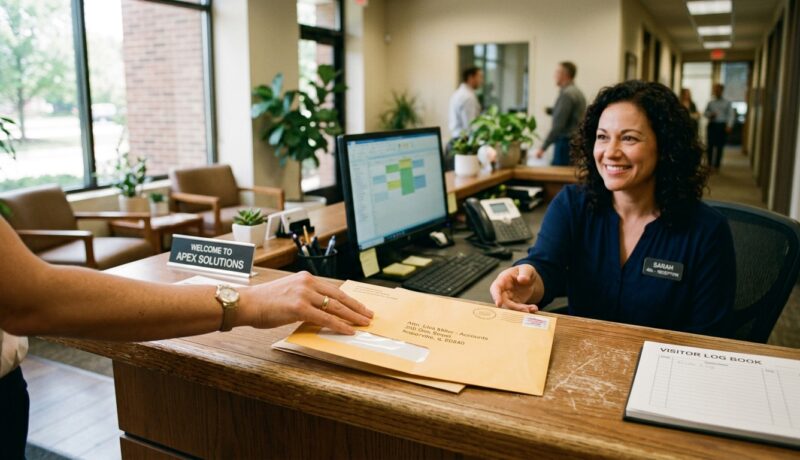
A commercial cleaning introduction letter is a one-page printed letter you leave at a business’s front desk or send by mail. It asks for one thing: a short walkthrough of the space so you can quote it. You’ll find 4 copy-ready templates below, for offices, dental practices, daycares and businesses that haven’t answered your calls. The letter is not a brochure, a price sheet or a full menu of your services. Each of those gives the reader a reason to file it and never call.
This guide is written for US cleaning companies. A letter is one channel among several, and it works best next to calls and visits, not instead of them. If you haven’t picked your channels yet, start with how to find commercial cleaning clients, which compares calling, walk-ins, email and letters side by side.
When a letter helps, and when it’s a waste
A letter is slow and costs you paper, postage or a drive. It earns that cost in a few specific situations:
- After a walk-in when the right person wasn’t there. The front desk took your card, but the office manager was out. A letter left the same day, with that person’s name on it, gives them something to read later. See walk-in prospecting for commercial cleaning for what to say and write down at the desk.
- After 2 or more unanswered calls, or after a voicemail. At this point you’re a name on a message slip. A letter puts your offer in writing, in front of the person, without another ring at the front desk.
- For businesses with no published email address. Many small offices don’t list one. If the business does list an email, an email is faster and cheaper than a letter. Use the cold email templates for commercial cleaning contracts instead.
A letter is a waste in these cases:
- Franchises, chains and multi-location groups. Many of them choose a cleaning vendor at the regional or head office. Your letter reaches a local manager who can’t sign, and often can’t even pass it to the person who can.
- Large buildings with a mailroom or a property manager in between. Your letter goes into a sorting bin or to a building manager who already has a janitorial contract for the whole property. In a multi-tenant building, find out first whether tenants hire their own cleaners.
- Anyone on your do-not-contact list. If a business asked you to stop contacting it, a letter counts as contact. Check the list before you print, not after.
Expect most letters to get no reply. That’s normal, and it doesn’t mean the letter failed. Its job is to make your next call warmer, so you can say “I left a letter for you on Tuesday” instead of starting cold.
What to put on one page
Every line on the page should either explain who you are or move the reader toward a walkthrough. Here’s what a cleaning business letter to potential clients needs, in order:
- Addressee. Use a name if you got one from a call or a walk-in. Otherwise use a role: “Office Manager”, “Practice Manager”, “Center Director”. Never write “Dear Sir or Madam” or “To whom it may concern”. Both tell the reader you don’t know who they are.
- Opening. Who you are, what types of businesses you clean, and in which area. One or two sentences.
- One sentence about their kind of business. For a dental office, that’s cleaning after the last patient leaves. For a daycare, it’s cleaning after close, when the children are gone. This line shows you wrote the letter for them, not for everyone on your street.
- One ask. A 15-minute walkthrough. Give your phone number and say you’re happy to call, text or email, whichever suits them. Explain why: you can’t price the job fairly without seeing the space. That’s true, and it also answers “just send me a price” before they ask. For what to do once you’re inside, see how to run a commercial cleaning walkthrough.
- Proof you actually have. A certificate of insurance available on request, if you carry insurance. References from real clients. If you have no commercial clients yet, the letter must not suggest you do. Offer residential references, or a written cleaning checklist that shows what you’d do on each visit.
- Contact block. Your name, phone, email and website.
Leave out prices, guarantees, a full list of services and testimonials you don’t have. Prices without a walkthrough are guesses, and the reader knows it.
On format, you have options. Plain letterhead with your company name and contact details looks more like a letter and less like an ad. A handwritten signature takes 10 seconds and shows a person sent it. A business card, stapled or clipped to the top corner, gives the front desk something to keep if the letter goes in the bin. None of these is required, and a clean, well-printed letter on plain paper still does the job.
Templates
Copy a template, fill every bracket, and read it out loud once before you print. If a sentence sounds wrong out loud, it will read wrong too. Cut anything that isn’t true for your company.
Office, left at the front desk after a walk-in
[Date]
[Name or “Office Manager”] [Business name] [Address]
Dear [Name],
I stopped by today and spoke with [front desk person’s name, or “your front desk”]. Sorry I missed you.
I run [Company], a commercial cleaning company in [city or area]. We clean [types of businesses you clean, e.g. small offices and professional suites].
Most offices want cleaning done after hours, so staff walk into a clean space in the morning and nobody works around a vacuum. That’s how we schedule.
I’d like to ask for a 15-minute walkthrough. I can’t give you a fair price without seeing the space, the floors and how it’s used. Call or text me at [phone], or email [email], whichever is easier. I’ll also try your office by phone later this week.
[Proof line, e.g. “I can send a certificate of insurance on request.” Only include what’s true.]
Thank you,
[Signature] [Your name] [Company] · [phone] · [email] · [website]
This fails when the office is a branch of a larger company that hires cleaners centrally. If the front desk tells you that, ask for the name of the person who handles facilities and send the letter there instead.
Dental office
[Date]
[Name or “Practice Manager”] [Practice name] [Address]
Dear [Name],
I run [Company], a commercial cleaning company serving [city or area]. We clean [types of businesses you clean].
For a dental practice, we clean after the last patient leaves, so your team isn’t working around us. [One true sentence about how you handle dental spaces, e.g. which areas you clean and which you leave to clinical staff.]
I’m asking for one thing: a 15-minute walkthrough. Every practice has a different layout, and I can’t price it fairly without seeing it. You can reach me at [phone] by call or text, or at [email]. I’ll follow up by phone next week.
[Proof line, only what’s true.]
Thank you,
[Signature] [Your name] [Company] · [phone] · [email] · [website]
This fails when the letter reaches a front desk that doesn’t know who handles cleaning. In many practices it’s the office or practice manager, but sometimes the dentist-owner decides. Ask on your follow-up call before you send a second letter. The guide to dental office cleaning contracts covers who decides and what they ask. To see what a local market looks like, browse the lists of dental offices in Oklahoma City and dental offices in Charlotte.
Daycare or child care center
[Date]
[Name or “Center Director”] [Center name] [Address]
Dear [Name],
I run [Company], a commercial cleaning company in [city or area]. We clean [types of businesses you clean].
For a child care center, we clean after close, once the children and staff have gone home. [If true for your crew: “Everyone on our crew has passed a background check, and I can share details on request.”]
I’d like to set up a 15-minute walkthrough. Classrooms, nap areas and kitchens all need different work, so I can’t give a fair price until I’ve seen them. Call or text me at [phone], or email [email]. I’ll call the center next week to see what works for you.
[Proof line, only what’s true.]
Thank you,
[Signature] [Your name] [Company] · [phone] · [email] · [website]
This fails when the center has specific requirements you haven’t covered, such as cleaning products or staff screening. Don’t guess at those in the letter. Read the guide to daycare cleaning contracts first, and ask the director on the walkthrough. Example lists: daycares in Indianapolis and daycares in Fort Wayne.
Mailed after unanswered calls
[Date]
[Name or role] [Business name] [Address, including suite number]
Dear [Name],
I’ve called your office a couple of times about cleaning and haven’t caught you yet. I know the phone at a front desk doesn’t stop, so I’m putting it in writing instead.
I run [Company], a commercial cleaning company in [city or area]. We clean [types of businesses you clean], usually [after hours / after close].
If you’re happy with your current cleaning, no need to reply. If you’d like a second option, or a price to compare, I’d ask for a 15-minute walkthrough. I can’t quote fairly without seeing the space. Call or text me at [phone], or email [email].
Thank you,
[Signature] [Your name] [Company] · [phone] · [email] · [website]
The “no need to reply” line lowers the pressure, but it also gives a happy customer permission to ignore you. That’s fine. If your calls never got past the front desk, this letter may not reach the decision-maker either, so put a name on it if the front desk will give you one.
Dropping it off vs mailing it
Dropping a letter off costs you a drive but gives you a conversation. Hand it to the front desk, ask who handles cleaning for the business, and write that name on the envelope in front of them. Then write the name and the date in your notes, because you’ll use both on the follow-up call.
Don’t put a letter in a business’s mailbox. This applies to the US. 18 U.S.C. § 1725 prohibits placing unstamped mailable matter in a mail receptacle; cite the statute text and USPS guidance on mailbox use. This is general information, not legal advice. In practice, that leaves you two options: the front desk, or the mail.
Mailing saves the drive, but the letter arrives with the day’s other mail. Before you mail, check the suite number on the business’s own website. Map listings don’t always include it, and a letter without a suite number in an office building may not reach the right door. Envelopes give you a trade-off. A hand-addressed envelope looks personal and is more likely to be opened, but it takes time for each one. A printed envelope or label is faster for a batch, but it looks more like advertising mail.
Leads for Cleaners lists include each business’s address, and on US searches, a business email when the business lists one on its website. That lets you pick a letter or an email for each lead: email where there’s an address, a letter where there isn’t. The lists don’t include decision-maker names, so you’ll still get those from a call or a walk-in.
Mistakes that get a letter thrown out
Most letters that fail don’t fail because of the wording. They fail because of how they were sent:
- Sending to the whole list at once. You mail 100 letters, then you can only call 15 of those businesses that week. The other 85 letters go cold before you ring. Size each batch to the calls you can make in the next few days. Hypothetical example: if you can make 10 follow-up calls a day for 2 days, send 20 letters, not 100. Track who got which letter in a cold call tracking spreadsheet so the follow-ups don’t slip.
- A glossy brochure instead of a letter. A brochure reads like mail sent to every business on the street. The front desk sorts it with the other flyers. A plain letter addressed to a person gets read as correspondence.
- Two pages. A second page means the reader has to decide whether to keep going. Most won’t. If it doesn’t fit on one page, cut it.
- No date or no name. Without a date, you can’t say “the letter I left on Tuesday”. Without a name, you can’t ask for the person it was addressed to. Your follow-up call then starts from zero.
Follow up within a few days
Call a few days after the letter lands, while it might still be on the desk. As an example, 2 to 5 days after delivery works for many offices, but adjust to how busy the business is. Mention the letter in your first sentence.
You: Hi, this is [Your name] with [Company]. I left a letter for [Name] on [day] about cleaning. Is [Name] available?
Front desk: What’s it regarding?
You: It’s about a quick walkthrough for a cleaning quote. [Name] should have the letter from [day].
If they never saw it:
You: No problem, it may not have reached them yet. Could I get the best way to reach [Name], or a time that’s usually quieter?
This fails when the front desk has no memory of the letter and no interest in finding it. Don’t argue about whether it arrived. Ask for the name and best time, write both down, and call again.
Log the letter as a touch in your tracking sheet: channel “letter”, the date it was delivered, and who it was addressed to. Then put the follow-up call date in your calendar. Neither a spreadsheet nor a Leads for Cleaners list will remind you, so the calendar has to hold that date. When you do get the decision-maker on the phone, use the process in how to cold call for commercial cleaning contracts.
To build a list with addresses for your own city and business type, sign up for the free plan: 2 searches, 10 leads each, no card required.